



BLOG
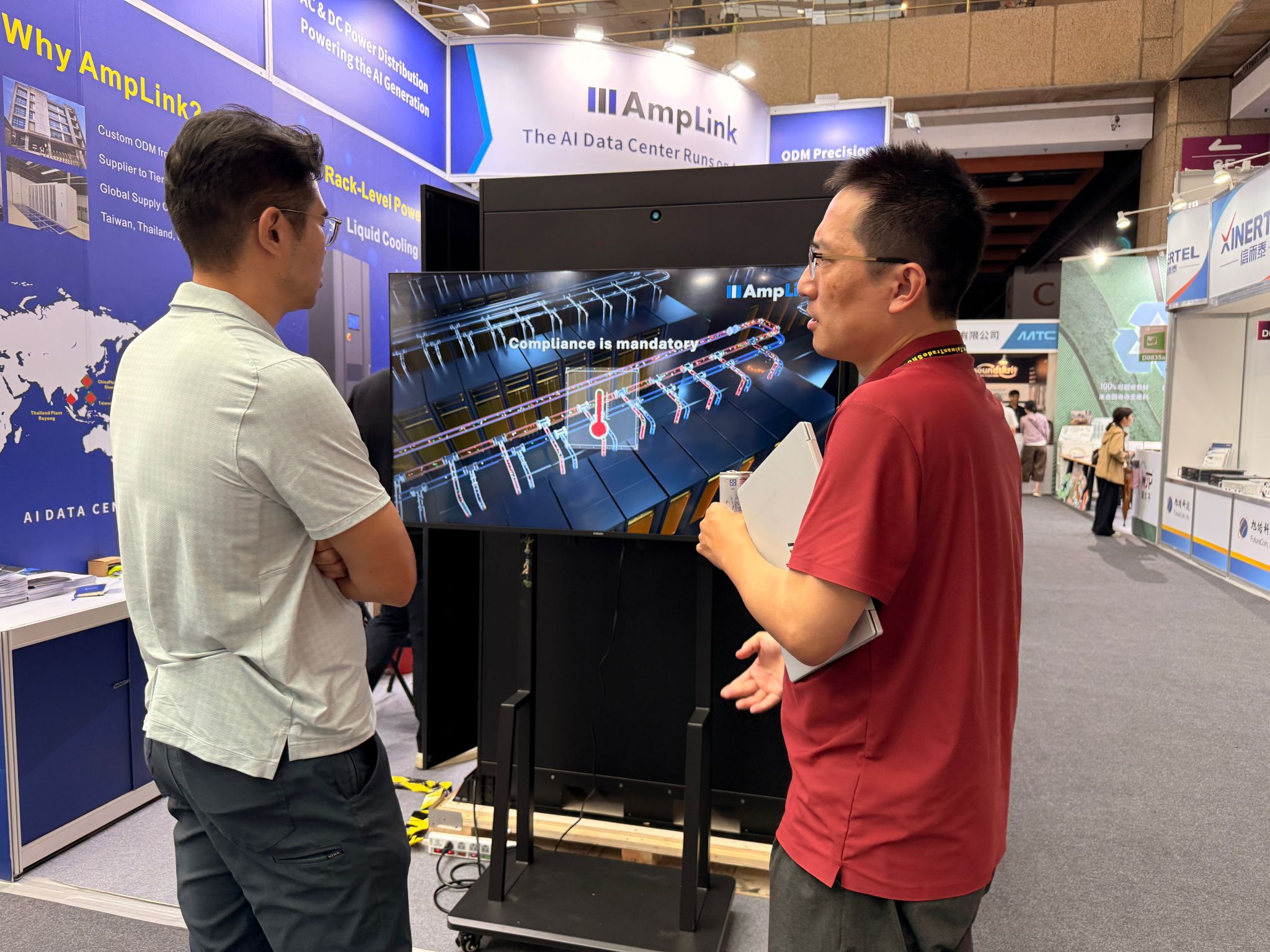

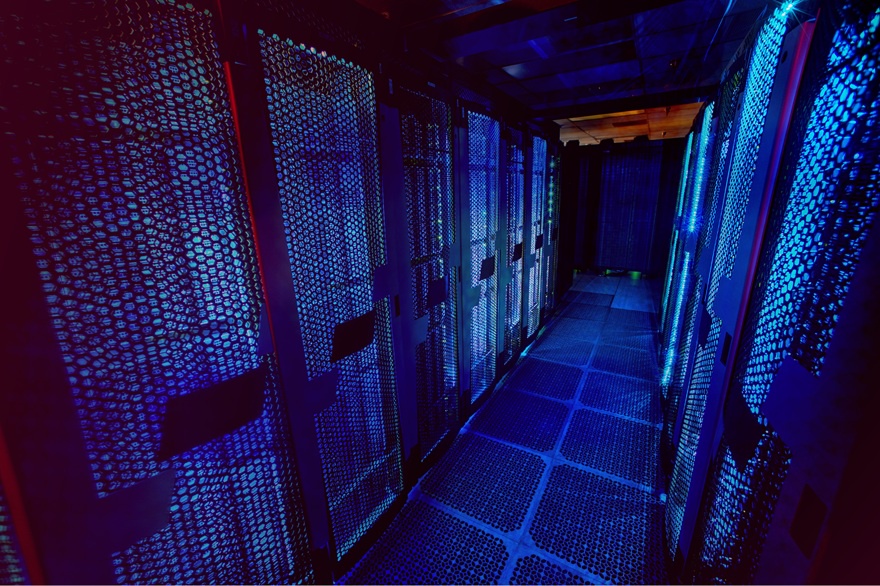
Lenovo has teamed up with Nvidia to help AI cloud providers speed up large-scale AI infrastructure deployments.
The two have established a “Lenovo AI Cloud Gigafactory with Nvidia” solution, bringing together Nvidia’s accelerators with Lenovo Neptune liquid-cooled hybrid AI infrastructure, Lenovo manufacturing, and the company’s Hybrid AI Factory services.
The offering supports the Blackwell Ultra generation of GPUs, both B300 and GB300 NVL72, and will also support the upcoming Nvidia Vera Rubin NVL72 system, which features 72 Rubin GPUs, 36 Vera CPUs, ConnectX-9 SuperNICs, BlueField-4 DPUs, and Spectrum-X Ethernet in a single rack.
According to Lenovo, this can improve time to first token to just weeks, speeding up the time it takes to translate AI compute investments to production-ready systems.
“Together, Lenovo and Nvidia are pushing the boundaries of AI factories to the gigawatt level, simplifying deployment of cloud-scale infrastructure that moves AI intelligence into production faster, with greater efficiency and predictability. With Lenovo’s industry-leading Neptune liquid cooling technology, global manufacturing and service capabilities, the Lenovo AI Cloud Gigafactory with Nvidia sets a new benchmark for scalable AI factory design, enabling the world’s most advanced AI environments to be deployed in record-setting time, fueling innovation at manufacturing speed across industries.”
Ventiva debuts ionic cooling system reference designs at CES
Cooling vendor Ventiva has revealed details of a new reference design for a zoned air cooling architecture, which it says can be used in AI data centers.
The system, designed for data center-scale cooling, as well as for Edge systems and end-user devices such as laptops, was showcased for the first time at the CES 2026 trade show, taking place in Las Vegas this week.
California-based Ventiva claims the new zoned cooling design enables airflow and cooling capacity to be directed precisely to the components that generate the most heat – such as CPUs, GPUs, and AI accelerators – delivering “targeted, efficient cooling where it matters most.”
The company said the design uses “ionic cooling technology” and “delivers micro-channeled airflow that efficiently directs cooling to emerging board hot spots such as memory, storage, and more.”
This apparently “frees valuable chassis space, improving rack density and system design breakthroughs, and is an augmentative cooling solution for hybrid, liquid solutions in data centers.”
The system appears to be a plasma cooling set-up, where electrostatic fields convert electrical current into airflow. Several other vendors are marketing plasma cooling solutions.
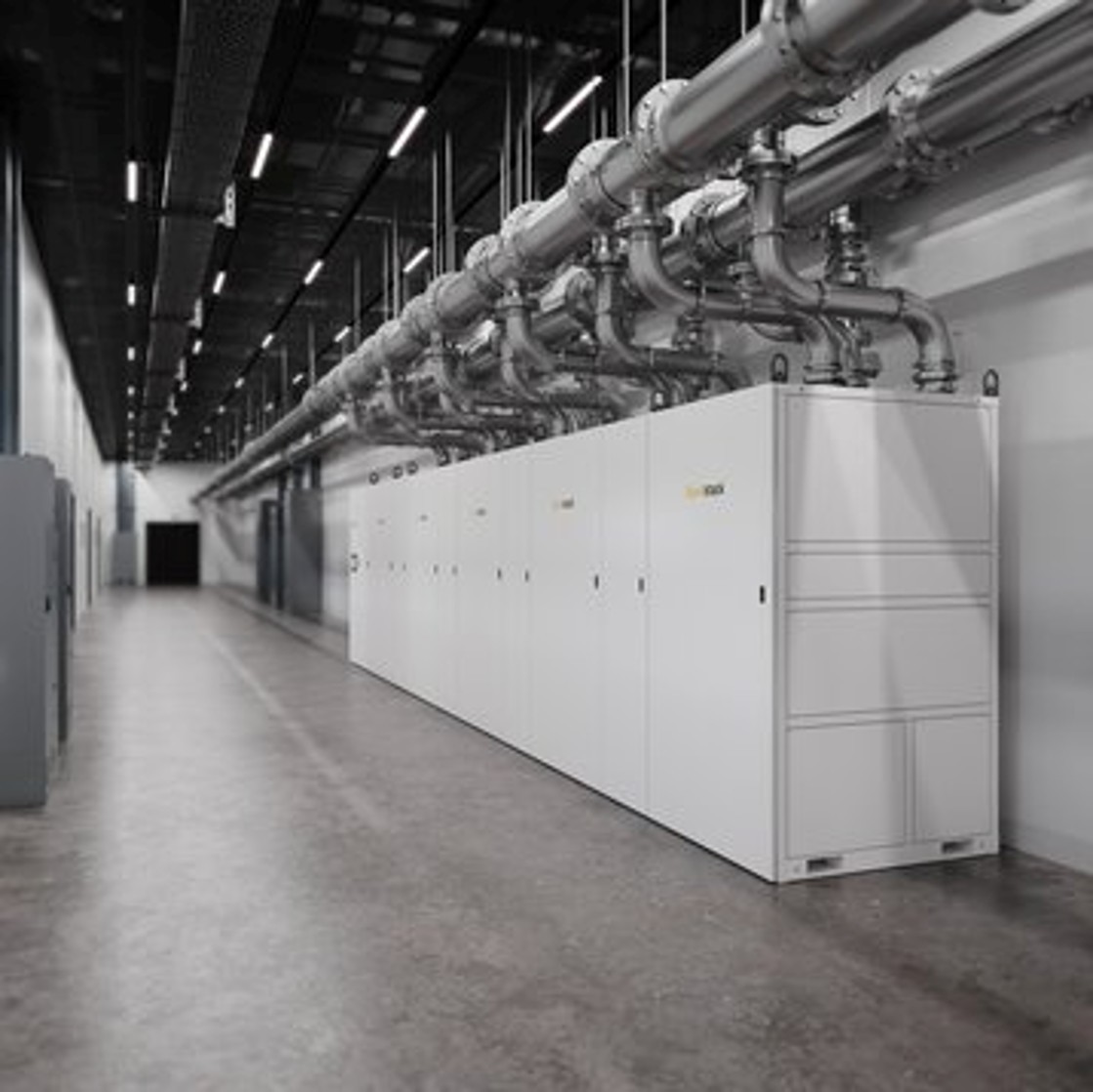
LiquidStack secures 300MW CDU order
Liquid cooling firm LiquidStack has secured a large-scale order from a major data center customer.
The company this week announced a 300MW order of Coolant Distribution Unit (CDU) capacity from an unnamed “major US-based data center operator.”
The order covers multiple undisclosed sites and will support “AI-ready data center deployments.”
The customer is described as a “long-established operator with a growing portfolio of AI-ready facilities across the United States.”
“Orders of this size signal a clear inflection point for liquid cooling,” said Joe Capes, CEO of LiquidStack. “Operators are committing to liquid cooling as core infrastructure for AI, and LiquidStack is uniquely positioned to support that transition at scale.”
Vera Rubin hot water cooling reveal triggers HVAC share drop
US heating, ventilation, and air conditioning (HVAC) companies saw a stock sell-off on Tuesday following news that Nvidia’s Vera Rubin chips can be cooled with water at 45°C (113°F), "with no chillers necessary."
Nvidia CEO Jensen Huang made the announcement at Consumer Electronics Show (CES) in Las Vegas yesterday, revealing that the chips are now in “full production,” and fueling a share price drop for a number of HVAC companies, including Modine Manufacturing (7.5 percent), Johnson Controls (6.2 percent), Trane Technologies (5.3 percent), and Carrier Global (1 percent).
In his keynote speech, the Nvidia CEO promised Vera Rubin would have twice the power of Nvidia’s Blackwell GPUs, while also removing the need for water chillers in data centers.
Nvidia expects Vera Rubin to be available in the second half of 2026.
HVAC companies have greatly benefited from the momentum of the data center industry in recent years, though many still only consider it a smaller part of their business.
Any shift away from chillers, space cooling, and air cooling could have an impact on the companies involved in these areas that lack a presence in liquid cooling.
On the other hand, some analysts have noted that nVent and Vertiv could benefit from the proliferation of Vera Rubin due to their strong existing positions in liquid cooling.
Nvidia says Vera Rubin will be able to reach 5x and 3.5x of inference and training performance, respectively, compared to Blackwell. The Vera Rubin NVL72 rack will be 100 percent liquid cooled and feature cable‑free modular tray designs.

Naver Cloud completes cluster of 4,000 Nvidia B200 GPUs in South Korea
South Korean cloud company Naver Cloud has built a cluster of 4,000 Nvidia B200 GPUs.
The company revealed today, January 8, that it had completed the cluster, calling it the largest of its kind in South Korea.
Naver said in its announcement that the cluster uses cooling, power, and network optimization technologies based on its previous experience with deploying an Nvidia SuperPod.
Internal testing suggests that with the new cluster, Naver will be able to train a 72 billion-parameter model in 1.5 months as opposed to the 18 months it would take with the company's current cluster of 2,048 A100 GPUs.
Naver CEO, Choi Soo-yeon, said: “This AI infrastructure construction is meaningful in that it goes beyond a simple technology investment, and it secures a core asset that supports national AI competitiveness and AI independence and sovereignty.”
The company has not stated which data center the cluster is housed in, though it is one of the company's South Korea locations.
In recent months, Naver has revealed plans to expand its data center in Sejong, South Korea, aiming to reach 270MW.
Naver Cloud currently lists six cloud regions in South Korea, as well as one each in Japan, Germany, Singapore, and the US (West Coast); future regions are planned in the US (East Coast), Vietnam, Taiwan, and Thailand. It previously exited Hong Kong. The company also lists plans for a 10MW site in Charlotte, North Carolina, and a capacity totaling 40MW across Sweden.
In October 2025, it was revealed that Naver would deploy some 60,000 Nvidia GPUs in partnership with LG AI Research, SK Telecom, NC AI, and Upstage.

University of Southern Denmark to deploy Nvidia-powered AI supercomputer in partnership with Danfoss and HPE
The University of Southern Denmark (SDU) has announced plans to deploy an Nvidia Blackwell-based AI supercomputer at a data center in Sønderborg, a town in the south of the country.
Set to be developed in partnership with Danfoss and HPE, the university said the data center will combine “sustainable energy management and advanced AI capabilities,” and is supported by ProjectZero, a public-private partnership in Sønderborg aiming to make the town’s energy system carbon-neutral by 2029.
The data center will be built using HPE’s AI Mod POD service, which allows customers to deploy modular data centers that support AI workloads. The supercomputer will consist of 128 direct liquid-cooled Nvidia Blackwell GPUs, deployed in HPE Cray XD225v and HPE ProLiant Compute XD685 servers, HPE ProLiant DL325 and DL365 servers.
In a statement, Danfoss said the data center will also take advantage of heat reuse modules, which the company will supply to support heat recovery at the facility.
The data center will build on efforts previously undertaken by the university at its SDU eScience Center to develop cloud technology and high-performance computing (HPC) services, including DeiC Interactive HPC, an “interactive computational resource” which has been available to Danish universities via SDU’s UCloud supercomputer since 2019.

Crusoe gets go-ahead for 1.8GW data center campus and power plant in Cheyenne, Wyoming
Data center firm Crusoe and power company Tallgrass have been granted permission to build a 1.8GW gas-powered data center campus in Cheyenne, Wyoming.
The scheme, announced last year, will see Crusoe construct the data center campus, known as Project Jade, on land near Terry Ranch Road, in Laramie County, south of Cheyenne, near the border with Colorado.
Tallgrass will build the BFC Power and Cheyenne Power Hub adjacent to the data center site to provide power for the facility via natural gas turbines.
Wyoming Governor Mark Gordon welcomed news of the development and told DCD the state is ready to host more data center firms. Wyoming produces approximately 12x the power its citizens consume, from sources including coal, natural gas, and renewable energy, and much of this is currently exported to other states.
Gordon said some of this power could remain in Wyoming to support new digital infrastructure. “Data centers are a great use of our energy, a terrific opportunity to educate our workforce, and a fantastic addition to our tax base," Gordon said. "We have lots of space, and a great climate for cooling, so I think Wyoming is one of the best places in the country to build new data centers like this.”
Residents also raised concerns about the impact of the development on the water supply in the area. Crusoe said the data center will use a closed-loop cooling system to keep water usage to a minimum.
The data center is being designed to scale to a capacity of up to 10GW, though the on-site power station will only generate 2.7GW, so this expansion would need to draw power from other sources.

Canaan pilot uses waste heat from Bitcoin mining to grow tomatoes
Bitcoin mining hardware giant Canaan has announced a new proof-of-concept project that aims to recover waste heat from cryptomining to warm a commercial greenhouse in Canada.
A two-year 3MW pilot facility in Manitoba will see 360 Avalon liquid-cooled computing servers tied into an operating greenhouse’s boiler loop.
This closed-loop heat-exchange system will see the mining machines preheat water rather than vent excess energy into the air.
The operation, which is being carried out in partnership with Bitforest Investment, is designed to deliver up to one million tonnes of hot water annually for year-round cultivation of tomatoes.
Canaan estimates that approximately 90 percent of the electricity consumed by the servers will be captured and recycled into the heating system.
The setup also eliminates the need for costly industrial cooling towers that are typically required in liquid-cooled data centers.
The partnership with Bitforest Investment includes a revenue-sharing agreement for grid demand-response programs, which would effectively turn the mining operation into a flexible load for the local power grid.
The Manitoba project follows a growing trend of heat-reuse projects across the sector, with similar initiatives being set up in northern Europe.
Cryptomining device manufacturer Power Mining recently developed a portable data center housed inside a shipping container that redirects residual heat from Bitcoin mining into municipal heating grids.
The first two units, which start from €300,000 ($349,000), will be shipped to a town in Scandinavia, where they are expected to each mine up to 9.7 Bitcoin per year while heating around 2,000 homes.

TM Nxera signs 280MW electrical supply agreement with TNB to power Malaysian data center campus
TM Nxera has signed a long-term electrical supply agreement with Tenaga Nasional, Malaysia’s primary electricity utility, for 280MW of power for its under-development data center campus in Iskandar Puteri, Johor, Malaysia.
TM Nxera, which is a joint venture between Telekom Malaysia (TM) and Nxera, Singtel’s Malaysian data center arm, has said it expects the campus to begin its first phase of operations sometime this year.
According to the company, the data center is designed to support large-scale AI workloads and will have a capacity of approximately 200MW. It will also feature liquid-cooling technologies and integrate energy and water-efficient systems, the company claimed. In addition, connectivity will be supported by TM and Singtel Group’s Digital InfraCo subsea cable networks.
The data center was originally unveiled in June 2024, with its initial phase expected to offer 64MW. The company subsequently broke ground on the facility in July of the same year.
Over the past couple of years, Tenaga Nasional has signed several electrical supply agreements with data center companies across Malaysia.
Last June, the utility signed a 500MW solar supply agreement with DayOne to power DayOne’s Nusajaya Tech Park, in Gelang Patah, and Kempas Tech Park, in Johor Bahru, which have a combined capacity of 120MW.
Before this, in December of last year, it signed a 400MW electricity supply agreement with Bridge Data Centres to power its MY07 data center in Johor Ulu Tiram, Malaysia.

Dresden University of Technology to deploy Nvidia-powered supercomputer
Germany's Dresden University of Technology (TUD) is planning to deploy a new supercomputer from Atos/Eviden at its Center for Information Services and High-Performance Computing (ZIH).
Dubbed Deneb, the BullSequana XH3500-based system will be powered by two Nvidia Grace Blackwell superchips and, in total, comprise 184 “next-generation GPUs” and two petabytes of storage. The system also represents the first time Arm-based CPUs will be deployed by the university.
Costing around €9.4 million ($11m), Deneb was jointly funded by the Germany federal government, the Free State of Saxony, and the AI competence center ScaDS.AI Dresden/Leipzig. The new supercomputer will be housed at the university’s Lehmann Center data center at Lehmann Zentrum Rechenzentrum and is expected to go into operation in the fourth quarter of 2026, TUD said in a statement.
Like its predecessors, Capella and Barnard, Deneb’s water cooling system will allow 97 percent of the heat generated to be reused to heat nearby buildings or feed into the district heating network.

Leave A Reply