



BLOG

Aggreko expands liquid-cooled load bank fleet by 120MW in response to rising AI demand
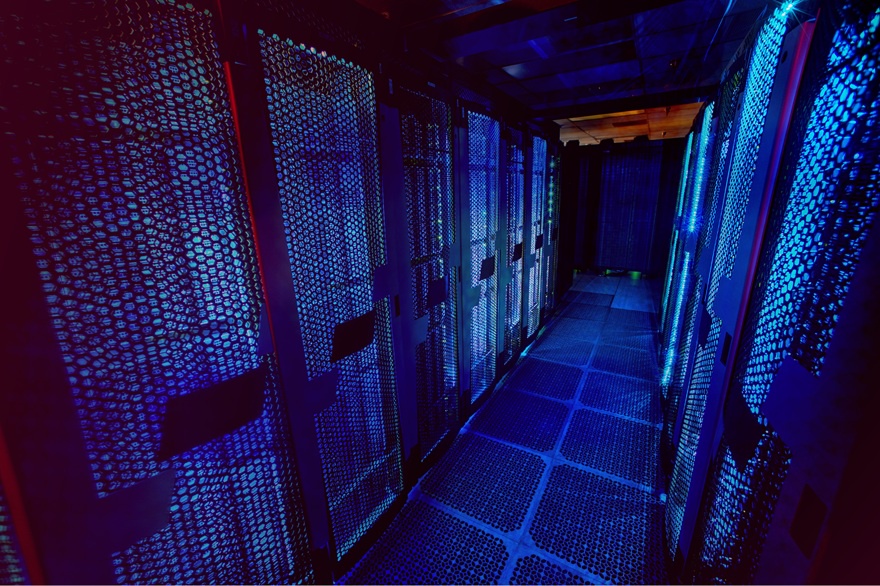
Data center cooling and power equipment provider Aggreko has expanded its liquid-cooled load bank (LCLB) fleet by 120MW to meet rising demand from the AI data center sector.
The company said it plans to double this capacity again in 2026, with investments spanning North America, Europe, and Asia.
According to the company, Aggreko’s expanded LCLB fleet supports liquid-to-liquid testing for primary and secondary cooling loops, including chiller systems and coolant distribution units. The equipment also simulates electrical load profiles for integrated systems testing.
The company said the investment allows contractors and operators to commission high-density facilities faster, reduce risk, and meet stricter energy-efficiency requirements.
The company claims that its LCLBs are engineered for mobility and remote operation and are built with corrosion-resistant materials for use in sensitive environments. The company provides full-service commissioning support, offering project-specific testing programs rather than off-the-shelf equipment delivery.
Aggreko said the expanded fleet positions the company to support next-generation AI and HPC data center deployments and comply with regional sustainability and efficiency regulations.
Based in the UK, Aggreko supplies data centers with temporary and permanent power, energy, and temperature-control solutions.
Nostromo Energy launches "ice battery" to cut data center cooling bills
An Israeli firm is touting “ice batteries” to help meet data center cooling requirements.
Nostromo Energy recently launched the IceBrick 360, a patented cold-thermal energy storage system that is apparently “engineered specifically for high demand data centers.”
The device is “designed to provide load flexibility to help expedite grid connection or increase computing capacity of existing locations,” the company said.
Ice batteries work by cooling ice stored in cells at times where demand for power is low. The batteries use the cold temperature of the ice to chill the cooling liquid needed in HVAC systems, eliminating the need for mechanical chillers, which are big consumers of electricity.
According to Nostromo Energy, this process can ensure 40 percent of data center power consumption is made flexible, meaning it can be shifted to off-peak hours to cut costs and reduce strain on the grid.
The company’s CEO, Yoram Ashery, told Fierce Networks that it had already signed one data center customer, and was in discussions with several others.
It also has an outstanding loan guarantee of up to $305.5 million from the US Department of Energy to deploy its technology at 193 commercial buildings in California, though this came under the previous administration, before President Trump took office.

KKR invests in Compass Datacenters' stabilized facilities
Investment giant KKR is investing in Compass Datacenters' stabilized facilities.
First reported by Bloomberg, Brookfield-owned Compass Datacenters signed a definitive agreement for KKR to invest in a portion of its operating data centers and future assets.
Compass confirmed the deal to the publication, though no official announcement has been made. The agreement is reportedly set to raise several billion dollars, according to Bloomberg.
Details on which assets are involved and the size of KRR's stake in each weren't shared.
People with knowledge of the matter said Compass had been holding talks about selling a stake in some of its mature portfolio to raise funds for the construction of new data centers.
Compass has 16 data center sites it is developing or operating across the US, Europe, and Israel.
Compass was acquired by Brookfield and Ontario Teachers Pension Plan from RedBird Capital Partners and the Azrieli Group in June 2023 for $5.5bn. The firm sold its prefab data center unit earlier this year.

Gibo plans 30MW+ AI data center in Malaysia
AI-generated content platform provider Gibo Holdings is planning to develop a 30MW data center that will house an AI cluster in Malaysia.
The facility will house 14,000 GPUs, according to Gibo, and be built for AI development and deployment, including the training of models and inferencing workloads.
While it will initially have a capacity of 30MW, Gibo plans to expand the site in phases, first to a 100MW multi-zone AI campus, and eventually to 200MW as its flagship facility.
Where the data center will be based has not been stated, but Gibo wants to establish several data centers across Malaysia, including in Sarawak, Johor, Penang, and Greater Kuala Lumpur.
The company says its data centers will use liquid or immersion cooling methods to improve their energy efficiency.
The project is currently in the construction planning phase. The company aims to have an AI data center network established in the next three to five years.
Gibo also has a digital payment platform. The company is listed on the Nasdaq stock exchange.
Malaysia's data center market has been rapidly expanding, with operators turning to Johor due to its proximity to Singapore. Kuala Lumpur and Cyberjaya are also notable hubs in the country.

Pioneer Power launches hybrid mobile power system for data center market
US electrical equipment developer Pioneer Power Solutions has launched a gas-powered hybrid mobile power system for the data center sector.
The system, known as PRYMUS, is built as a modular, scalable power unit available in pre-engineered blocks from 1MW to 10MW. The company claims that the system can be deployed and commissioned in roughly six months, a timeline that contrasts with the longer lead times associated with new grid-side infrastructure. The company positions the platform for use in modular and containerized data centers, including environments for testing new AI hardware.
The system can be fuelled by several options including RNG, LPG, rLPG, diesel and renewable diesel. It also intergrates Mobile Battery Energy Storage Systems (mBESS), paralleling switchgear, and advanced controls, which the company claims ensure robust base-load power while mBESS actively manages the instantaneous spikes inherent in AI workloads.
“Our pedigree in deploying complex microgrid projects equips us to engineer PRYMUS with proven, resilient architecture right out of the box,” said Geo Murickan, president of Pioneer eMobility. “By combining multi-fuel prime generation with mBESS for dynamic load management, we strive to deliver a superior power quality package capable of meeting the rigorous demands of next-generation AI chipsets and liquid-cooled systems, effectively transforming power generation into a mobile, plug-and-play solution.”

Empyrion eyes 200MW data center campus in Johor, Malaysia
APAC data center firm Empyrion Digital is expanding into Malaysia, with the company this week announcing plans for a 200MW campus in Johor.
Located in Nusajaya within the SiLC Industrial Cluster of Johor, the 34.9-acre MY1 campus is set to feature five 40MW buildings, with the first phase energized in September 2026 and the first building due to go live in Q4 2026.
Empyrion said it has received regulatory approval for both the Electricity Supply Agreement (ESA) and Data Centre Task Force (DCTF) application.
The site will reportedly utilize both air and liquid cooling.
Mark Fong, CEO of Empyrion Digital, said: “Malaysia has emerged as a key destination for hyperscale data centers, driven by strong digital transformation, favourable infrastructure, and government support. MY1 reflects Empyrion Digital’s continued ambition to expand our pan-Asian platform and meet our customers’ needs for scalable, green-by-design, and AI-ready infrastructure. Johor will be a cornerstone location in this strategy.”
Empyrion was launched by Asian infrastructure investment fund Seraya Partners in 2021. The company has two live sites: one self-built 29.4MW site in Seoul, South Korea, that launched in the summer, and a 12.5MW facility in Singapore acquired in 2021 alongside Malaysian conglomerate YTL in late 2021.
Empyrion is developing a 7MW facility in Taiwan, a 12MW facility in Bangkok, Thailand, and a 25MW facility in Tokyo, Japan.
Seraya Partners is an Asia-based independent private equity fund focused on infrastructure investments, with $1.3 billion in AUM across its funds and co-investment vehicles. Seraya has also launched a new investment unit focused on the Japanese data center market.
Trump allows sale of Nvidia's H200 chip to China
US President Donald Trump has allowed the sale of Nvidia's H200 GPU to China.
Posting on Truth Social, Trump said that the US would allow Nvidia to sell H200s to “approved customers” in China and other countries under certain conditions, including a 25 percent export tax, adding that the government’s approach would apply to AMD, Intel, and “other GREAT American Companies.”
Chinese officials have since said in a press conference that they have "noticed" the reports regarding the sale of Nvidia H200s. While little information was offered by the government, Guo Jiakun, China's spokesperson for its Ministry of Foreign Affairs, said: "China always advocates that China and the United States achieve mutual benefit through cooperation."
Trump has been eager to commercialize the US’ chip export regime. In November, the US government also approved the sale of Nvidia chips to Saudi Arabia and the UAE in exchange for a series of investment commitments into America, and the President has previously toyed with the idea of loosening export restrictions in exchange for an export tax.
In August, both Nvidia and AMD agreed to pay the US government 15 percent of the revenue generated from the sale of H20 and MI380 chips respectively to China.
The H20 is a less powerful, export-compliant version of the H100 chip.
Just last week, Huang’s efforts again bore fruit when it was reported that lawmakers would exclude the GAIN AI Act from the US’ annual defense policy bill.
The act would have required chipmakers like Nvidia to provide American businesses and persons priority in acquiring chips that would otherwise require an export license to be sent abroad, effectively limiting their ability to sell to non-American customers.

SoftBank considers acquiring data center operator Switch
SoftBank is in talks to acquire data center operator Switch.
The Japanese investment and telecoms giant has held discussions with the company's leadership and is conducting due diligence on the business, Bloomberg reports.
SoftBank is separately in talks to acquire Switch’s primary backer, DigitalBridge. DigitalBridge had around $108 billion of assets under management at the end of September, including Switch, but the acquisition would be of the management firm, worth $2.5bn.
Switch is seeking around $50 billion, including debt, and is also working towards going public next year.
The company was acquired by DigitalBridge and IFM back in 2022 for $11 billion.
SoftBank's own eccentric billionaire, Masayoshi Son, has sought to invest heavily in the AI boom.
The company is one of the primary backers of OpenAI's Stargate data center project (and of OpenAI itself), but has yet to provide all the money it pledged.

Oracle CEO moves to quell fears about debt needed for data center build-out after disappointing Q2 results
Oracle’s share price plummeted 10 percent on Wednesday after its quarterly revenue fell short of expectations.
Larry Ellison’s firm, which has become a key player in the AI data center ecosystem thanks to deals with the likes of OpenAI and Microsoft, brought in $16.06 billion in the three months to the end of November, slightly down on the $16.2 billion predicted by Wall Street analysts.
Since then, questions have been raised over how Oracle will fulfil some of these contracts, and the amount of debt the firm needs to take on to pay for the data center capacity its customers are demanding. Analysts at KeyBanc Capital Markets said in September that Big Red may need to borrow up to $100 billion over four years to meet its commitments to OpenAI, for whom it is providing much of the infrastructure underpinning the Stargate digital infrastructure project.
Oracle’s quarterly results were, by most standards, pretty impressive, with revenue up 14 percent Year-on-Year (YoY), and income from its cloud unit Oracle Cloud Infrastructure (OCI), which covers its AI services, growing 34 percent, to $7.97 billion. The fact that these numbers led to its share price dropping so markedly illustrates the difficulty AI infrastructure companies may have meeting heightened market expectations, which have swelled the values of many businesses in the sector over the last year.
CEO Clay Magouyrk said OCI had handed over 400MW of data center capacity to customers during the quarter, and that it delivered 50 percent more GPU capacity to clients than it did in the previous quarter. Full-year capex expectations have also been raised by $15bn, up from the estimated $35bn from the previous quarter.

Leave A Reply