



BLOG

nVent debuts updated liquid cooling products for AI workloads
nVent has launched a new modular data center liquid cooling solution, which it says is ready to meet the demands of current and future AI chips.
The new range of products includes enhanced coolant distribution unit (CDU) offerings with new row and rack-based CDU, alongside advanced technology cooling system manifolds.
As well as modular and scalable row-based CDUs, nVent’s updated portfolio includes next-generation PDUs, AC and DC rack CDUs, and new technology cooling system (TCS) manifolds.
According to the vendor, “these new solutions bring cutting-edge cooling infrastructure to data centers to support the AI buildout.”
It has also developed a common control platform that it hopes will enhance reliability and improve the user experience for data center operators.
Elsewhere, nVent is one of a number of vendors to have built a CDU inspired by Google’s Project Deschutes, the in-house CDU design developed by the cloud and search giant. Revealed earlier this year, Google has since made the specs of Project Deschutes available to the Open Compute Project community.

GRC announces new CDU and cooling rack for Edge deployments
Immersion cooling firm GRC has announced a new cooling distribution unit (CDU) and a new immersion system for Edge deployments.
GRC announces ICEraQ Nano
The company this week announced ICEraQ Nano, a new liquid-to-air immersion cooling rack system purpose-built for Edge deployments in small data rooms and communications closets.
The stand-alone liquid-to-air cooled rack delivers 13kW of cooling without chilled water and offers 10U of immersion-cooled space, cooling with 340 liters of dielectric fluid.
The Nano ships pre-filled with ElectroSafe fluid and features an integrated liquid-to-air heat exchanger. The company said the system features an automated fluid management system, server lift mechanism, and top-mounted service tray for server maintenance.
GRC releases new CDU
This month also saw GRC announce the launch of the ReliaSys IR500 CDU.
The system, designed for direct liquid cooling (DLC) and rear door heat exchanger (RDHX) deployments, delivers up to 500kW of cooling capacity.
GRC partners with Endor for gigawatt-scale data centers
November also saw GRC announce a partnership with Endor Development to develop and deploy “innovative immersion cooling solutions for giga-scale AI data centers that meet the demanding cooling needs of AI factories.”
Together, the companies aim to develop immersion cooling solutions for data center reference designs, total cost of ownership and return on investment tools, and warranties in partnership with server and dielectric fluid OEMs.
Seoul National University signs MoU with Databean for immersion cooling
Seoul National University (SNU) in South Korea will test immersion cooling.
HD Hyundai Oilbank, SNU’s College of Engineering, and immersion cooling system operator Databean this month signed a memorandum of understanding (MoU) for an AI infrastructure immersion cooling validation project.
Under the MoU, immersion cooling will be deployed at SNU’s AI research lab early next year for testing purposes.
The lab is facing “disruption to research activities caused by fan noise and high internal temperatures generated by air-cooled servers,” and so is looking to address the issue with immersion cooling.
SNU will offer the data center and GPUs, Databean will install its SmartBox immersion cooling system, and HD Hyundai Oilbank will supply the immersion cooling fluid and provide technical support and maintenance services.
Based on OCP specifications, Databean’s SmartBox can host from 21U to 42U of equipment and offer cooling capacities ranging from 50kW to 100kW. The company also offers a smaller variant, known as SmartBox Red, which offers 6U of space and 7kW of cooling.

NorthC and Legrand deliver a new class of AI-enabled data center infrastructure in Munchenstein (Basel) 1
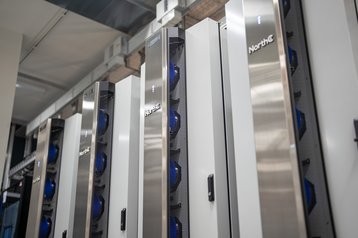
Legrand, a global leader in electrical and digital building infrastructures, has partnered with NorthC Data Centers (NorthC), a leading European data center and colocation services provider, to transform its data center in Münchenstein (Basel) 1 into a high-density, AI-ready facility.
This upgrade facilitates the rapid deployment of advanced GPU clusters, hybrid-cloud workloads, and scalable high-performance computing (HPC) environments.
NorthC, which operates regional data centers in Switzerland, the Netherlands, and Germany, faced growing demand for AI and HPC capacity at its Münchenstein (Basel) 1 site.
Legrand, through its specialist brand USystems, supplied ColdLogik Rear-Door Heat Exchangers (RDHx) for rack-level cooling. This innovative cooling system mounts directly onto the rear of server racks, absorbing heat from the hot air expelled by the servers and removing it through a highly efficient heat exchanger before recirculating the cooled air.
This closed-loop system design results in significant efficiency gains while supporting high-density racks, making it the most energy-efficient rear-door cooling solution available worldwide.
As a result of these upgrades, energy consumption at the Münchenstein site has been reduced by approximately 80 percent, thanks to the rear-door cooling solution and the infrastructure improvements.
The facility is now fully equipped for AI and HPC applications, supporting GPU-driven clusters, hybrid cloud environments, and high-density computing operations. NorthC's customers benefit from high-speed, low-latency infrastructure that complies with Swiss data protection laws.
Turner Construction doubles data center revenue in 2025 with major AI-infrastructure projects
International construction services firm Turner Construction Company has more than doubled its data center revenue Year-on-Year (YoY), increasing from $3.6 billion in 2024 to $6.4bn in the first nine months of 2025.
The company, which is now seeing data center construction make up 40 percent of its $40.3bn order backlog, said it expects to deliver $9bn in data center revenue for the full year.
Turner said its backlog represents work for more than 30 clients on more than 250 projects worldwide. The company also delivers semiconductor plants and other AI infrastructure.
Turner is a subsidiary of Germany-based construction services firm Hochtief, which is itself majority owned by global construction company ACS.
According to financial results released this week, ACS has had a number of significant new data center projects in the first nine months of 2025.
These include a $15bn data center complex in Wisconsin, part of OpenAI’s Stargate program; a more than $6bn commitment to build a 100MW data center for CoreWeave in Pennsylvania, purpose-built for AI use cases; a high-density, liquid cooling-ready 64MW in Cyberjaya, Malaysia; and a data center in Madrid.
Of these, Turner is working on the Stargate, CoreWeave, and Madrid projects. Dragados, another ACS subsidiary, will also work on the Madrid project. The data center in Malaysia is being built by another subsidiary, Leighton.
The company also noted several new orders in the semiconductor sector, which will be handled by Turner.

Overwatch Capital and Japan's Idemitsu to develop 1GW data centers in the US
Investment firm Overwatch Capital and Japanese energy company Idemitsu have partnered to develop 1GW worth of data centers in the US.
An announcement made last week revealed that the pair would work together to develop facilities based in Texas, Ohio, Illinois, Utah, Colorado, Arizona, Georgia, Nevada, South Carolina, and Pennsylvania. All will draw their energy from natural gas provided by Idemitsu.
Idemitsu will also invest an unknown amount into Overwatch Capital, which will deploy its Sustainable Infrastructure for Data and Energy platform as part of the partnership. This means that the data centers will have access to on-site natural gas generation.
The facilities are meant to meet demand from “hyperscalers, GPU-cloud providers, and institutional investors."
Overwatch has stated that it anticipates starting two projects next year, located in Dallas-Forth Worth, Texas, and Columbus, Ohio. Their capacities were not disclosed, and timelines were not provided for the other sites.
UK's Blackpool Council looking for provider to develop £300m data center after granting planning permission for project
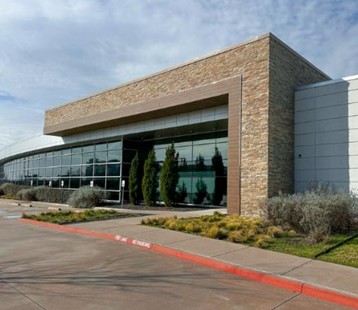
The UK seaside town of Blackpool is looking for a provider to develop a data center worth £300m ($393m) after granting planning permission for the facility earlier this month.
Following the Blackpool Council's decision to grant planning permission for the project, the Council has issued a tender notice sourcing a third-party provider to “invest, develop, and operate a 6MVA exemplar data center.”
The provider will also be responsible for integrating the facility’s waste heat with Silicon Sands, a flagship digital infrastructure project at the Blackpool Airport Enterprise Zone announced back in May 2024.
The zone was home to an airport before being demolished in 2023, and the data center is set to be built on the site of the former airport fire station.
Previous planning proceedings show that the data center will be powered by renewable energy and utilize immersion cooling.
The contract will last three years from June 2026 onwards, and the council estimates that the award decision will happen in late May of next year.
According to a release from the council, planning permission is set to be submitted before Christmas following "significant interest" from private sector investors.
Blackpool is not a big data center market, though an 80MW facility was proposed for Peel Park in the town in October 2024. The Silicon Sands site benefits from being close to a cable landing station for the Celtix-Connect2 subsea cable, which links Europe and the US.

Supercapacitor developer Skeleton opens Leipzig factory in Germany, targets AI data center market
Estonian power infrastructure developer Skeleton Technologies has officially opened its €220 million ($192.5m) SuperFactory in Markranstädt, near Leipzig, Germany.
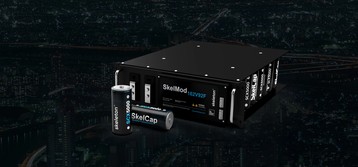
The company develops supercapacitor systems for the utility and AI data center market. The system is a high-power energy-storage device designed to handle sharp load fluctuations in grids and AI data centers in under a millisecond.
According to its CEO, Taavi Madiberk, the company is already shipping supercapacitor systems to major US hyperscalers from its German production lines, with additional systems deployed across European grids in partnership with Siemens, Hitachi Energy, and General Electric.
The facility is part of Skeleton’s fully European value chain and produces the company’s curved-graphene supercapacitors. According to Madiberk, the device contains no lithium, cobalt, manganese, or other critical or flammable materials, allowing it to be vertically integrated, covering raw materials, cell production, module assembly, and power electronics, with an annual capacity of up to 12 million cells.
While the company’s technology is used across both the automotive sector and electrical grids, its fastest-growing customer segment is AI infrastructure. Due to the uneven power profile of AI data centers, operators face steep and frequent load swings that stress both site power systems and local grids. Skeleton claims that its GrapheneGPU solution, which uses supercapacitors as fast-response buffers, can play a crucial role in maintaining uptime.
Cooling issue at data center halts futures trading for CME Group
CME Group was forced to halt futures trading today after a cooling issue at one of its data centers.
As reported by Reuters, the exchange operator was forced to halt trading for several markets.
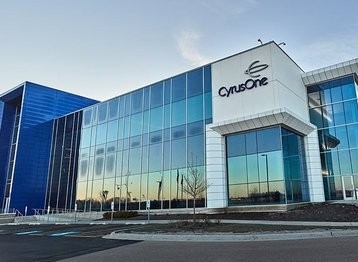
CME posted a statement to its website explaining the problem: "Due to a cooling issue at CyrusOne data centers, our markets are currently halted. Support is working to resolve the issue in the near term and will advise clients of Pre-Open details as soon as they are available.”
CyrusOne operates some 55 data centers globally. While the data center in question has not been named, in 2016, CME Group sold its data center in Aurora, Illinois, to CyrusOne under a 15-year sale-leaseback deal. Today, the Aurora campus spans three data centers with a total of 450,000 sq ft (41,806 sqm) and 109MW of IT capacity, with the company having repeatedly expanded it.
Update -
A CyrusOne spokesperson told DCD via email: "CyrusOne is actively responding to a cooling system issue at our CHI1 data center facility in the Chicago area that has impacted service for certain customers, including CME Group. On November 27, our CHI1 facility experienced a chiller plant failure affecting multiple cooling units. Our engineering teams, along with specialized mechanical contractors, are on-site working to restore full cooling capacity. We have successfully restarted several chillers at limited capacity and have deployed temporary cooling equipment to supplement our permanent systems.
Google must double AI capacity every six months to meet demand
Google will have to double its "serving capacity" for AI every six months to meet the demand for AI, Google Cloud VP Amin Vahdat has reportedly said.
CNBC reported Vahdat's comments, which were made in a presentation during an all-hands meeting on November 6, the same day the Ironwood TPU became generally available. In the presentation, seen by CNBC, a slide covering AI compute demand said "now we must double every 6 months.... the next 1000x in 4-5 years.“
Google needs to “be able to deliver 1,000 times more capability, compute, storage networking for essentially the same cost and increasingly, the same power, the same energy level,” Vahdat said. “It won’t be easy, but through collaboration and co-design, we’re going to get there.”
During Google's latest earnings call, the company raised its capex guidance for the year for the second time. At the start of the year, estimates were for around $75bn in spend, rising to $85bn in Q2, and now peaking at between $91bn and $93bn. Of that, the "vast majority" went on technical infrastructure - 60 percent on servers, and 40 percent on data centers and networking equipment.
The latest iteration of Google's Tensor Processing Units (TPUs) – dubbed Ironwood – officially became generally available to customers on November 6. The chips can be scaled up to 9,216 chips in a single superpod. Ironwood's specs were first revealed in April 2025, offering 192GB of 7.4Tbps of high-bandwidth memory (HBM) per chip, a 6x increase on Google’s sixth-generation Trillium TPU, in addition to 1.2Tbps bidirectional Inter-Chip Interconnect (ICI) bandwidth, a 1.5x improvement over Trillium. Anthropic has already signed on to use up to a million TPUs in a deal worth tens of billions of dollars.
Oracle to expand Abu Dhabi region with Nvidia Blackwell Supercluster
Oracle is expanding its Abu Dhabi cloud region in the United Arab Emirates (UAE) with a "Supercluster" deployment of Nvidia Blackwell GPUs.
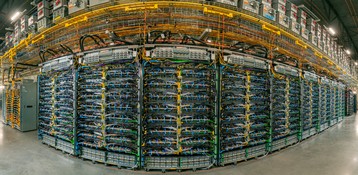
Oracle's Superclusters are large-scale clusters of GPUs dedicated to AI workloads. The new cluster will feature more than 4,000 Nvidia Blackwell GPUs and aims to help support sovereign AI initiatives in the Middle East.
“This partnership delivers unprecedented compute and performance at scale, supporting Abu Dhabi's vision of an AI-native government by 2027,” added Marc Domenech, senior regional director of Enterprise META, Nvidia. “By integrating Nvidia accelerated computing with OCI’s secure, distributed cloud, we are ensuring nations have the specialized 'AI Factory' required to innovate locally while maintaining data control.”
Plans for the Supercluster come just a week after the US eased restrictions on chip sales to the UAE. The UAE's G42 and Saudi Arabia's Humain are reportedly set to buy up to 35,000 GB300s - or equivalent - each.
The Supercluster in the UAE is set to be far smaller than others deployed by Oracle thus far. In October, the company revealed plans for its Zettascale10 cluster that would initially target 800,000 GPUs.

Leave A Reply